
Motor challenges arising from Parkinson’s disease can inhibit speech function, with ripple effects on wellbeing.

Singing with others can help.
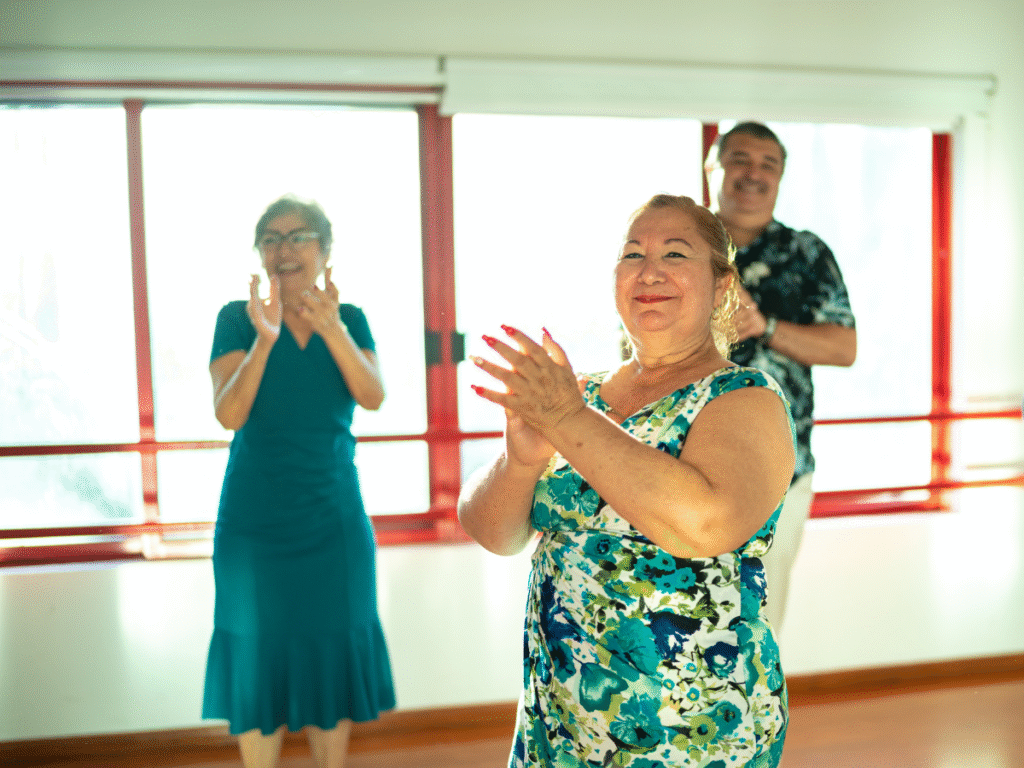
For many people living with Parkinson’s disease, changes in movement are only part of the picture. Parkinson’s can also affect the voice, breathing, and swallowing — making it harder to speak clearly, feel steady in the breath, or eat and drink with ease. Over time, these changes can shape how people connect with others, express themselves, and move through the world.


Click the icon in the top left corner to filter for singing groups for people with Parkinson’s, or browse the list below.
WHEN: Wednesdays 1-2pm
WHERE: Online
FEE: None
CONTACT: brain.wellness@ubc.ca | https://www.bcbrainwellness.ca/summer-2024-details
MORE INFO: For aging adults or those with Parkinson’s, Aphasia, or Dementia
WHEN: Thursdays, 10-11am (Jan 11th – Apr 4th)
WHERE: Online
FEE: $90/season, membership required.
CONTACT: information@cummingscentre.org | 514-343-3510 | https://cummingscentre.formtitan.com/ftproject/ft98ca8588d5c74dd3addc4f76b1a8c1ff/Product?ftlang=English&variable1=&productid=01tJQ000003Ub8UYAS
MORE INFO: Join a certified music therapist for this dynamic program to strengthen your voice and how you interact with it! This online singing program is designed for people living with vocal health issues, including, but not limited to Parkinson’s Disease, Post Stroke, MS, COPD, and other pulmonary issues.
WHEN: Wednesdays 3:30-4:30pm
WHERE: Online
FEE: None
CONTACT: Zachary at zachary.levine@weizmann.ac.il, Sophia at werdenan@mcmaster.ca | https://parkinsons-chorus-hamilton.bravesites.com/
MORE INFO: Instructor: Sophia | The Hamilton Parkinson’s Chorus is a welcoming place for people to exercise speech and breathing muscles, experience music, and engage in a community. The Hamilton Parkinson’s Chorus operates in association with McMaster University, and is inspired by the Toronto Parkinson’s Choir, Singing with Parkinson’s. No musical experience is required, and membership is entirely free. Newcomers are welcome at all rehearsals – we will provide you with a virtual music binder to follow along during rehearsal. Sing up to the newlsetter to join.
WHEN: Fridays, 1:30pm
WHERE: 136 Crosbie Road, Suite 305, St. John’s + Online
FEE: None
CONTACT: 709-754-4428 | parkinsonsocietynl@outlook.com | https://www.facebook.com/groups/PSNLMT
MORE INFO: We offer weekly music therapy sessions with a registered music therapist! Instructor: Renee White
WHEN: Fridays, 10-11am
WHERE: 202-2680 Blanshard Street, Victoria, BC
FEE: None
CONTACT: info@parkinsonwellness.ca | 250-360-6800
MORE INFO: Anyone who is diagnosed with Parkinson’s disease or a Parkinsonism is welcome to take the class.
WHEN: Thursdays 11:30AM-12:30pm
WHERE: Online
FEE: None
CONTACT: info@parkinsonwellness.ca | 250-360-6800 | https://parkinsonwellness.ca/classes
MORE INFO: Anyone who is diagnosed with Parkinson’s disease or a Parkinsonism is welcome to take the class.
WHEN: Mondays, 4pm
WHERE: Online
FEE: $12 / class
CONTACT: thehealthchoir@gmail.com
MORE INFO: The Parkinson’s Health Choir is a therapeutic singing class for individuals with Parkinson’s. The class meets weekly online through Zoom and all are welcome. Songs and breathing exercises aid in clarity of speech, respiratory strength and lifting the spirits through song. An exercise class for your voice! The class is lead by singing teacher and music therapist Antonia Pigot and is based on the research model from Colorado State University.
WHEN: Mondays 1-2pm
WHERE: Online
FEE: None
CONTACT: parkinsonenmouvement@gmail.com | charlotteellen@gmail.com | servicespml@parkinsonquebec.ca | (514) 868-0597 ext. 3 | Parkinsonmontreallaval.ca
MORE INFO: This group is open to individuals with Parkinson’s and their caregivers. Activity is free for members who have signed up. To sign up, please contact our offices by phone or email at the contact information provided above. Services are bilingual (French and English).
WHEN: Mondays 4-5pm
WHERE: Belgo Centre, 372 Rue Sainte-Catherine O, Montréal, QC
CONTACT: parkinsonenmouvement@gmail.com | charlotteellen@gmail.com | servicespml@parkinsonquebec.ca | (514) 868-0597 ext. 3 | Parkinsonmontreallaval.ca
MORE INFO: This group is open to individuals with Parkinson’s and their caregivers. Activity is free for members who have signed up. To sign up, please contact our offices by phone or email at the contact information provided above. Services are bilingual (French and English).
WHEN: Fridays 12:30-1:30pm
WHERE: Online
FEE: $264.00 ($22.00 / session)
CONTACT: sophia@signaturetherapy.ca | 1-519-897-7364 | https://psso.ca/programs-services/parkinsons-music-choir/
MORE INFO: The choir is a progressive 12-week singing program designed to enhance respiratory functions for individuals experiencing Parkinson’s Disease. During The Parkinson Choir, you will:
– Engage in a 12-week therapeutic program designed to help people with Parkinson’s sing and speak louder
– Participate in weekly sessions lasting for 1-hour
– Practice breathing and vocal exercises to improve vocal loudness and clarity while speaking
– Sing songs chosen by you and other group members
– Feel more confident with your voice in social situations
– Expect to have fun and connect with others
WHEN: Thursdays at 2pm
WHERE: Online
FEE: None
CONTACT: dustydora@sympatico.ca. | https://singingwithparkinsons.com/
MORE INFO: For individuals with Parkinson’s Disease, Conductor: Paula Wolfson, In partnership with Toronto Metropolitan Universitiy’s SMART Lab
SINGWELL-AFFILIATED
WHEN: Fridays 10-11:30am
WHERE: Online
FEE: None
CONTACT: info@parkinsonassociation.ca | 1-800-561-1911 (toll free) | https://parkinsonassociation.ca/wp-content/uploads/2025/05/2025-Program-Calendar-V02.pdf
MORE INFO: This weekly Zoom program gives you a chance to workout your vocal cords from the comfort of your own home! This program requires no singing skills or experience to participate. This Zoom drop-in program is open to everyone.
WHEN: Tuesdays 1-2pm
WHERE: 525 Beresford Avenue, Winnipeg, MB, R3L 1J4
FEE: None
CONTACT: info@uturnpd.org | jordana@uturnpd.org | https://uturnparkinsons.org/our-classes/#inperson
MORE INFO: A vocal exercise and singing class for individuals with Parkinson’s disease. Registration must be completed prior to attending. This can be done online on our website or in-person. If you’re coming in-person to complete your registration, please let us know ahead of time so we can have registration ready for you.
SINGWELL-AFFILIATED
WHEN: Mondays, 3-4pm
WHERE: Online
FEE: Free programming through the BC Brain Wellness Program
CONTACT: czfriesen@gmail.com
MORE INFO: For aging adults, people with aphasia, dementia, or Parkinson’s, and their care partners
SINGWELL-AFFILIATED


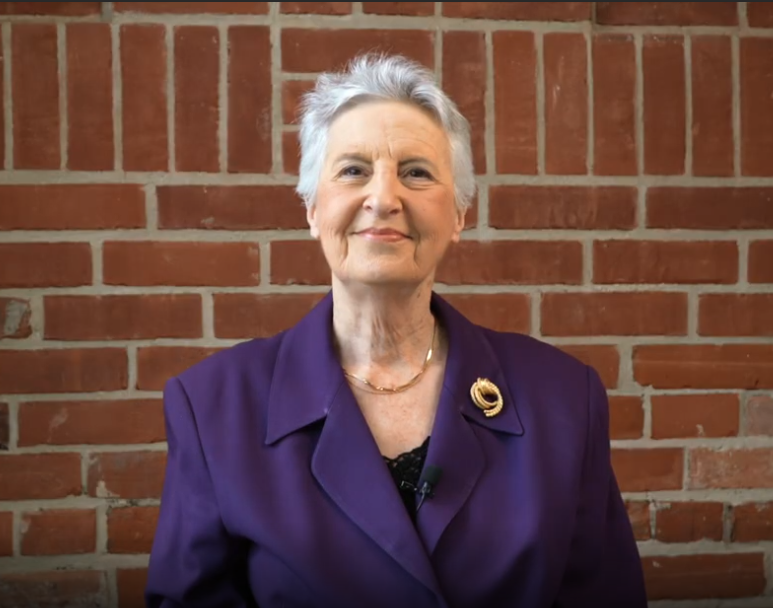
Group singing offers meaningful psychosocial support for people living with Parkinson’s disease, addressing challenges that extend well beyond motor symptoms.
Singing in a group creates shared, non-clinical spaces where people can connect with others who understand life with Parkinson’s. Participants consistently report increased feelings of belonging and reduced isolation and loneliness.
Across multiple studies, people with Parkinson’s report noticeable improvements in mood, reduced depressive symptoms, and lower stress and anxiety after participating in singing groups. Some studies also show measurable biological changes, such as reduced cortisol (a stress hormone), alongside reports of increased joy, emotional release, and enjoyment.
By supporting vocal expression and communication, singing helps many participants feel more confident expressing themselves and taking part in conversations and social situations.
Group singing is often described as more engaging and enjoyable than traditional exercise or therapy-based activities. Its social, creative, and non-clinical nature can make people more likely to attend regularly and stay involved over time.
People with Parkinson’s frequently report that singing helps them reconnect with creativity, personal identity, and a sense of meaning beyond their diagnosis — offering a way to express themselves that is not centered on symptoms or limitations.
– PARTICIPANT
SINGING WITH PARKISON’S GROUP

Changes in voice and speech are among the most common and impactful symptoms of Parkinson’s disease. Singing directly engages the respiratory, phonatory, and articulatory systems involved in vocal communication.
Singing-based programs consistently improve vocal intensity, helping address the reduced loudness (hypophonia) common in Parkinson’s.
Singing strengthens coordination between breathing and voice production, supporting clearer and more stable speech patterns.
Many participants demonstrate increased ability to sustain sounds, reflecting improved vocal control and respiratory efficiency.
Singing helps people use a wider range of pitches and vary their voice more easily, counteracting the flat or monotone speech that can develop in Parkinson’s.
Gains in loudness, articulation, rhythm, and breath control translate into clearer everyday speech, making it easier to be understood by others.
Participants frequently report greater satisfaction, confidence, and ease when using their voice in daily life.
This intervention involved individual singing homework with regular weekly in-lab sessions where feedback was provided. The video demonstrates progress over the duration of the intervention study.
– PARTICIPANT
SINGING WITH PARKINSON’S GROUP

Swallowing difficulties (dysphagia) can emerge as Parkinson’s disease progresses, increasing risks related to nutrition, hydration, and airway safety. Research suggests singing may help support the muscles and coordination involved in swallowing.
Breathing and swallowing share the same airway and must be carefully coordinated to keep food and liquid out of the lungs. Singing helps train this coordination as it engages both the respiratory and laryngeal systems, which supports safe and efficient swallowing.
Laryngeal elevation refers to the upward movement of the voice box during a swallow. When this movement is stronger or lasts longer, it helps close off the airway and open the esophagus, reducing the risk of food or liquid entering the lungs. Singing has been shown to enhance or prolong laryngeal elevation.
Swallowing function often declines over time in Parkinson’s disease. Singing interventions, however, have been associated with preserved swallowing abilities — in both early and more advanced stages — suggesting benefits even when people begin later in the disease.
In both early and advanced PD, therapeutic singing has been shown to preserve swallowing abilities over time, whereas comparison groups often show decline.
– TIM HAGUE SR.
FOUNDER, U-TURN PARKINSON’S

Respiratory changes in Parkinson’s disease can affect speech, swallowing, endurance, and airway protection. Singing provides structured, engaging respiratory training that targets these systems.
Singing-based interventions are consistently associated with increased inspiratory (breathing in) and expiratory (breathing out) muscle strength.
Participants show better control of airflow during speech and sustained vocalization, making it easier to speak for longer phrases, project the voice, and avoid running out of breath mid-sentence.
Singing strengthens the muscles used for forceful exhalation, similar to other forms of expiratory muscle strength training (such as blowing devices or resisted breathing exercises). Stronger coughs help clear material from the airway, protecting the lungs and supporting safer swallowing.
Improvements in respiratory control can extend to broader motor function and daily activities that rely on timing breath with movement and speech.
Many participants report feeling more at ease and capable when breathing during communication and physical activity, rather than feeling short of breath or hesitant to speak.
– TIM HAGUE SR.
FOUNDER, U-TURN PARKINSON’S


